
Censurada
Truthfulness is not contingent upon originality

The other day I got the chance to watch Mario Garza’s period romance Censurada, starring Nerea Rodríguez as Salomé, a dyslexic organist who finds herself working at her uncle’s church in late-1960s Spain. She falls in love with Miranda (Sena Ortiz de Zarate), who encourages her to chase her songwriting dreams as they endeavour to defy Francoist societal norms and live happily ever after.
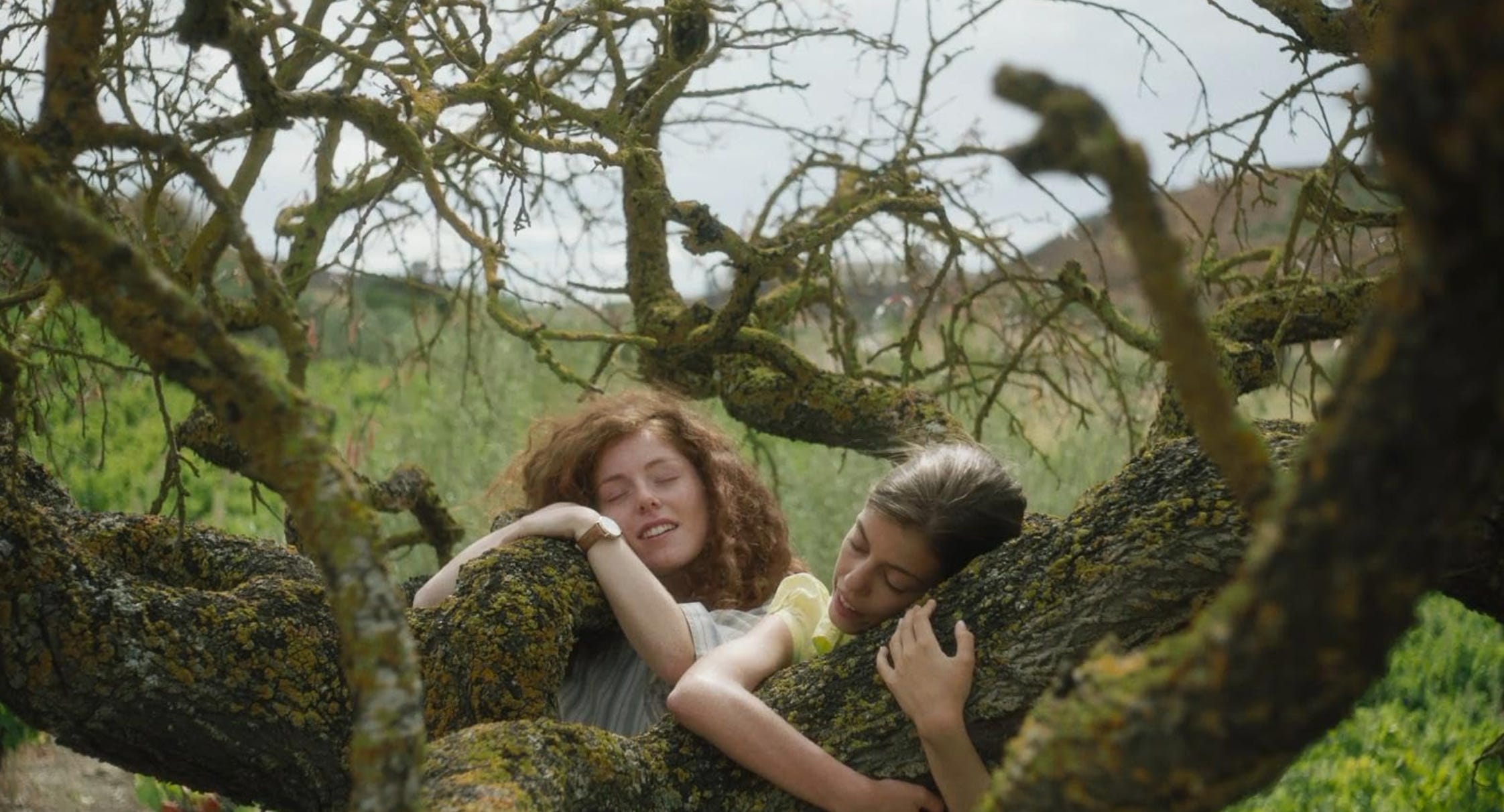
Here’s the thing: As a story, Censurada is less serious than most fan-fiction1; the antagonists in this film are cartoonishly cruel to the point where I half-expected them to grow mustaches for twiddling purposes before climbing Palantir’s corporate ladder. Meanwhile, Salomé — our protagonist! — dishes out such insane life lessons as “Bad people feel envy” or such poetic lyrics as “This way, I feel less weird.” Elsewhere, its rapid-fire plotting resembles the storytelling of a musical number (there exist a handful of actual, narratively-relevant musical interludes sung by Salomé as well), which is aesthetically truthful to the campy essence the film lands on but traitorous to any claims of serious drama or storytelling it may (or may not) be making. One beat in particular even borrows from campy cartoons during an intimate moment between Salomé and Miranda; the camera holds steady on the couple, and then Miranda’s mother walks into the frame, startling them with her sudden appearance. I was losing my mind.
All that to say, I don’t actually believe that Garza’s intention was to make a serious drama or indulge in serious storytelling.2 In fact, there is not a doubt in my mind that he was gunning for a melting pot of queer expression by concocting a brew full of notes from musicals, fan-fiction, and camp before pouring it over a Francoist-era3 period piece where the simple matter of lesbians existing could therefore almost single-handedly carry the story’s stakes. For what scarcity of original or believable notes that leaves us with, it also results in a total vacancy of false ones. Metatextually, it’s a smart win condition for a queer coming-of-age joint; more on this in a moment.
I assume such a calculation because Garza certainly knows what he’s doing on a raw, sensory filmmaking level. Censurada is thoughtfully framed, lit, blocked, and designed (the lighting in particular having the good sense to cue the moment Salomé meets the moment of the film’s sort-of climax), Rodríguez’s musical background means she very naturally and pleasantly carries the film’s many melodies, and the score eschews orchestral flatness for a tone of distinctly Amblin-esque sentimentality. It even ends with a white iris transition.
Again — like the film’s diegetic dimension — none of it is really conducive to originality or believability, but all of it is truthful to the artistic locomotion that Censurada makes a point to board time and time again; undiluted queer scrap representative of a young heart that must concern itself with how it lives.
And frankly, that’s its own original note.
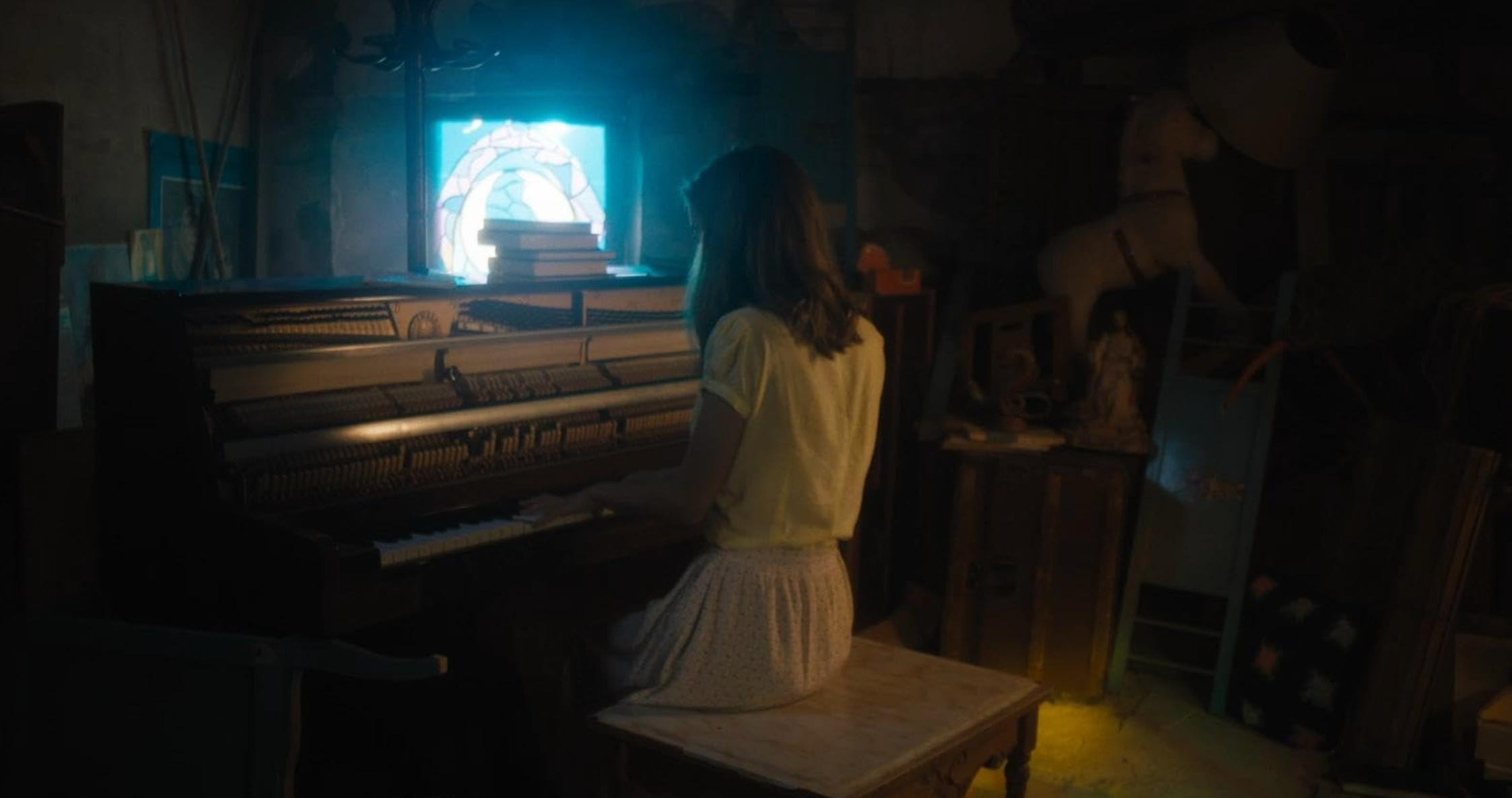
I’m reminded of Oliver Hermanus’s The History of Sound (my favourite film of 2025) and the manner in which it champions folk music — songs of people — amidst the encroaching shadow of such assimilatory institutions like the choral church. There’s a scene in Censurada wherein Salomé is told that she’s only allowed to play songs of prayer on the church organ, and so she later draws piano keys on her desk to practice her musical reflexes before going on to write a song that’s entirely her own. That song is later marked up by an official of the sponsored music contest she enters — removing references to queerness while overcorrecting her “bad spelling” (she’s dyslexic, remember) — which nearly sabotages her performance of said song.4 Is the song even hers anymore without her queerness and her spelling?
From there, I can’t help but take Garza’s forsaking of originality and believability in pursuit of truthfulness and apply it to the bigger picture here. When we talk about storytelling, we tend to concern ourselves with the believability of the drama (which can’t be objectively measured but is nevertheless a relevant dimension on a subjective, individual level) or the originality of the perspective and ideas being explored. Both of these things necessarily demand that the art reach a certain standard or prove itself amidst external precedents. Truthfulness does no such thing, and it is in fact truthfulness that political censorship makes to suppress, while a system’s established precedents of originality and believability imbue artistic pursuits with externally-sourced ambition at what’s often the expense of intimate expression. Songs of people no more.
And indeed, consider how many queer people — how many social minorities in general — could claim familiarity with the pressure to similarly prove themselves worthy of civil rights, dignities, and recognition when they simply want to live and be free.
Not to say that ambition, originality, and believability are inherently bad things, of course. It’s simply worthwhile to realize what can be lost if — in the matter of creation, and, by extension, of life — one pays too much attention to that which is outside of the song they walk to.
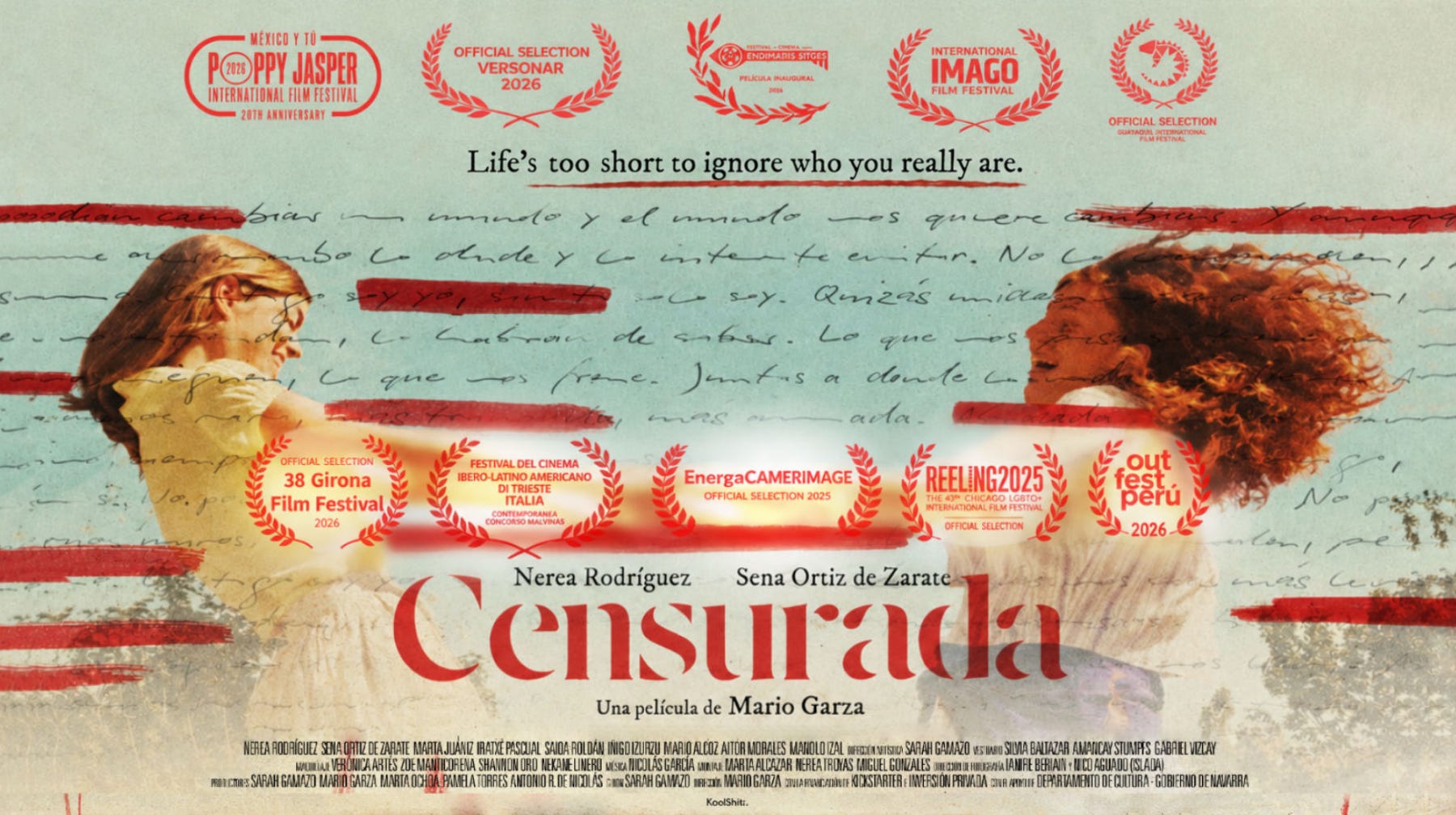
And so I think to call Censurada “good” would be dismissive of its artistic machinations; anti-colonial in spirit and in fact entirely unconcerned with any notions of external aspiration or standard — a read that’s more or less confirmed by the film’s final beat, which I won’t spoil here. What I’ll say instead is that Censurada is — completely, entirely, undeniably — Censurada. Speaking literally, that’s ideal.
Which I love and find fascinating as a craft.
“So-and-so intended…” or “So-and-so didn’t realize what they…” are grossly presumptuous statements that I don’t condone enough to use without acknowledging their presumptuousness in a footnote, but also don’t condemn enough to pedantically retool for what would mostly be my own selfish satisfaction.
A musically-inclined film set in a dictatorship? Gasp!
That alone closes the circuit of the film’s title (censurada = “to censor”).