
Doctor's Notes: Sentimental Value, Shadow, and Scare Me
Families, fengjian, and Fred

Welcome to Doctor’s Notes, where I — Charlotte of The Treatment — share some shorter but still Treatment-coded reviews for films I’ve watched lately. This will largely comprise recent and more commercial films so that I can keep my foot in the Rotten Tomatoes door while also introducing the widest possible audience to the New Film Criticism.
If you’re coming here from Rotten Tomatoes, know that “Fresh” and “Rotten” ratings indicate my personal enjoyment of the film only; they are not a testament to whether or not they’re worth watching. If I write about a film, that means I consider it worth watching.
I give star ratings for every film I plan on including here over at my Letterboxd account, where these reviews will then be posted after the Doctor’s Notes post goes live. Follow me to get a sneak peek at what I plan on writing about!
Table of Contents:
Sentimental Value
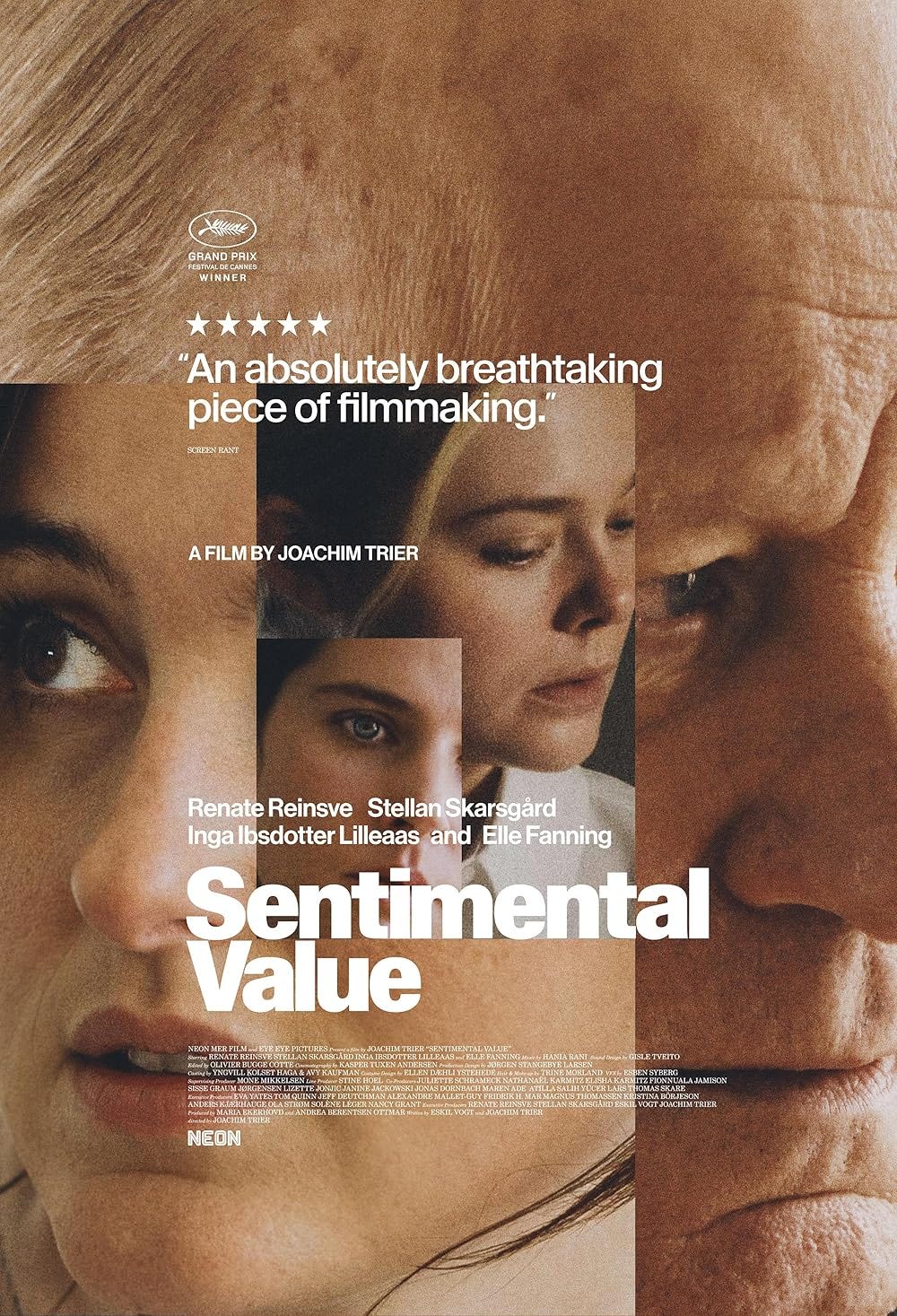
Authenticity1 is the most lucrative — and perhaps the only truly essential — currency for art to traffic in, and authenticity requires proximity to the subject being rendered in the art. In this case, the subject is family trauma. Nora (Renate Reinsve) and Gustav (Stellan Skarsgård) both have proximity to this.
But not all art is created equal. Where Gustav — a filmmaker — can channel his art into a physical outlet while benefitting from the hierarchy of the film set, Nora — an actress — must both draw from and release into the ethereality of emotion for the sake of her art, with nothing tactile to ground her. “You don’t decide anything for yourself [as an actor]; you just sit and wait for someone to desire you. It’s not good in the long run,” says Gustav to Nora.
There is power in the former, and there is vulnerability in the latter; such are also the positions of a father and a daughter in matters of familial dysfunction. Gustav has power as the father, as a filmmaker, and simply as an artist who has the privilege of packaging his emotions/creativity away from himself and into something physical. Nora does not; her “something physical” needs to be her father, and he’s not open for that sort of business.
Perhaps more importantly, though, there’s very real tension in Gustav reckoning with the responsibilities he has with this power right around the time that the film industry becomes demonstrably wishy-washy about anchoring itself in him any longer. He loses access to that which has always validated — nay, acknowledged — his experiences, but his experience still remains. His legacy, then, will only ever be captured as an impression, never as the full, real thing.
Except, it was always coming to this. To capture an actual, authentic experience in art is to only ever capture an impression of it. This was once negligible info to Gustav because authenticity was the means rather than the end. This is no longer the case. So now — on top of whatever ego death he’s probably facing from realizing that he’s only been capturing impressions this whole time — he’s asking Rachel Kemp (Elle Fanning) to dye her hair the same colour as Nora’s as if his previous understanding of the grammar of art and authenticity still applies.
But no, to capture the full-blooded authenticity of this would require a new kind of proximity — namely, a proximity to his daughter, which is an opportunity he sacrificed at the altar of Artistic Greatness.
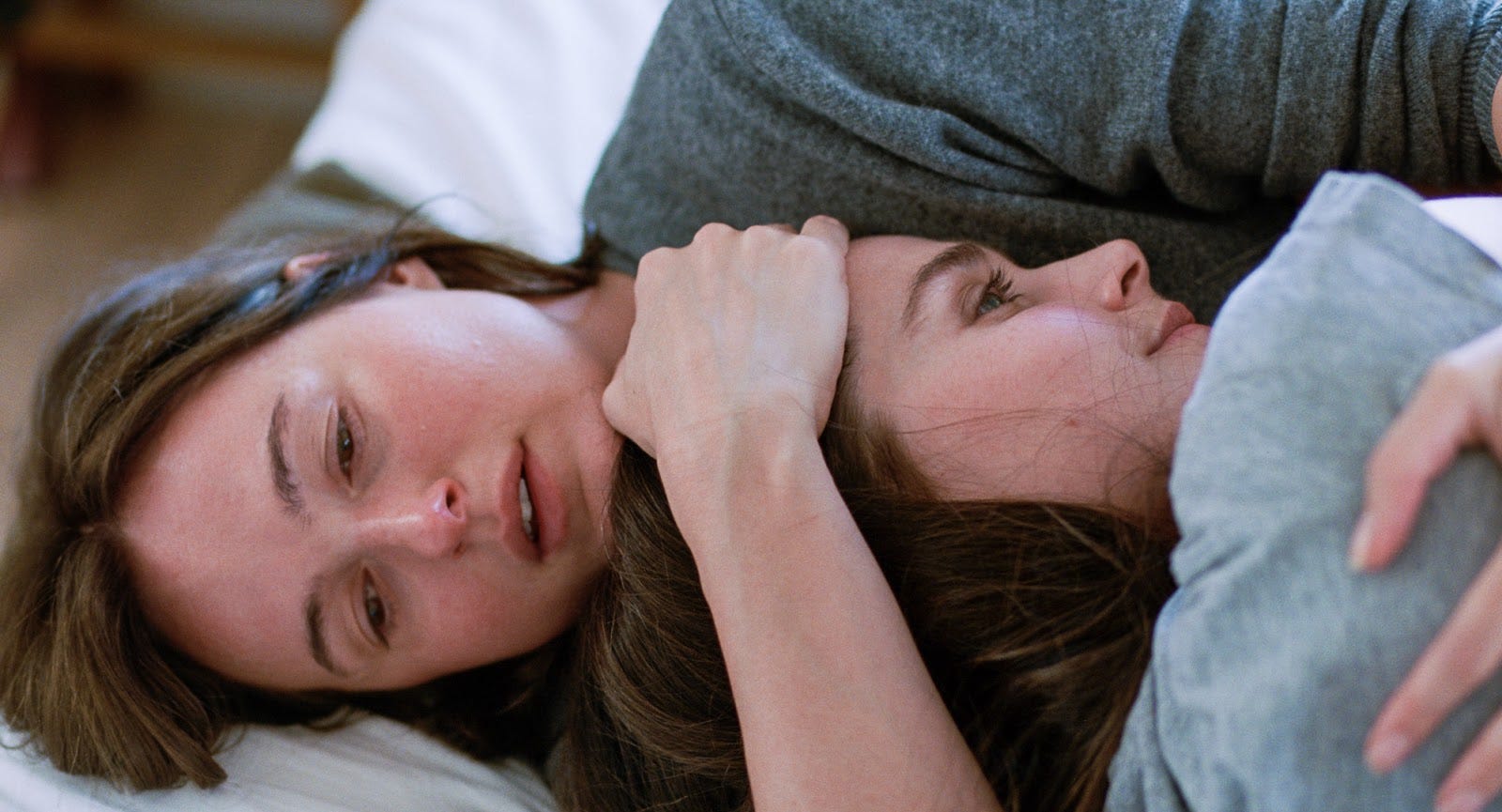
Moments after Gustav — without an ounce of self-awareness in his eye — makes the aforementioned comment on how miserable it is to be an actress, he pontificates on the necessity of freedom in pursuit of great art:
“Now, artists have to be like everyone else, equally dull and bourgeois. You can’t write Ulysses if you have to drive to soccer practice and... compare car insurance, right? Artists must be free.”
Meanwhile, his mother laid her life (i.e. time and freedom) on the line to defy Nazis, and — decades later — he’s sitting in a room telling a journalist to worship Rachel Kemp. You can beg a god — a false but nevertheless powerful one — for a home, but a home cannot coexist with godhood. What’s it going to be, Gustav?
And what if you do pick a home, like Agnes could on account of her lesser proximity to the dysfunction? Agnes, who moved away from the lure of artistic greatness in exchange for stability in the home she mothers? By the end of the film, Gustav probably wishes he had done the same. I guess that’s why he foregoes attractive reds and blues for a boring, stable grey. Colours are just impressions too, after all.
I personally found it tedious, but there’s very real nutrition in Sentimental Value’s perspective. Not sure why I’m seeing so much talk on Rotten Tomatoes about how it’s a movie for grown-ups. I can accept the statement, but if we’re making a point of acknowledging 2025 films that sport the specific prowess of treating audiences like adults, it should be said about stuff like Twinless and Sorry, Baby (to name a few) by several more orders of magnitude. From what I can see, it hasn’t been. Strange.
Shadow
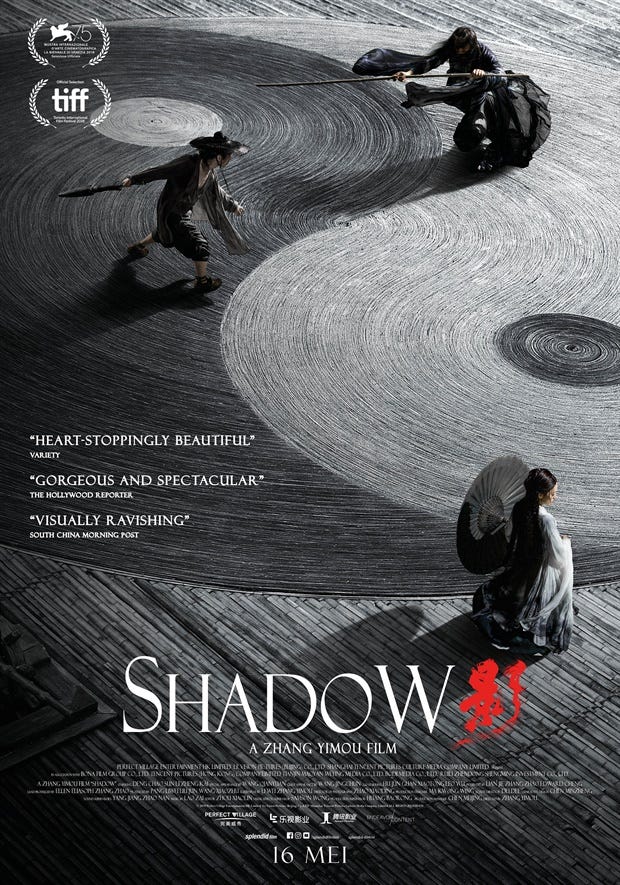
The story goes that director/co-writer Zhang Yimou opted for this monochrome colour scheme so as to channel the energy of a Chinese ink painting; a medium that has historically emphasized the capture of a subject’s spiritual essence rather than simply mimicking the appearance of it. Meanwhile, I don’t believe so much as ten minutes pass in Shadow’s runtime before the thoroughly unheavenly King Pei Liang drops a line of dialogue to the tune of: “I am the Heaven of Pei Kingdom.”
I’m not certain that Shadow can be spoken about in any way that isn’t at least mildly reductive, but I do think that anchoring the thesis in this matter — the false recreation of divinity by entirely superficial, dishonest means — is one’s best defense against that outcome.
Shadow’s world is grey, with only human bodies and the blood spilled from them providing any colour in the frame, as though calling attention to the fact of our flesh; the shell that can only mimic God, and which relies on the incorporeal human spirit/soul to well and truly channel God. The “divine right of kings” is born of this very same mimicry; a surface-level exhibition where the packaging is accepted as the key ingredient of Heaven.
Meanwhile, the ink painting backdrop — built for fluency in matters of essence — can observe the actual truth of these affairs; ugly deceit, malicious compliance, escalationist warmongering, and political compromise in the form of what’s effectively sex slavery. No signifiers of Heaven here.
All this, while matters of:
Loyalty (Treachery anchoring the entire premise of the film, with individual examples abound.)
Gender roles and expectations (Feminine combat moves being an exception rather than part of the combat status quo, and being tellingly instrumental in the success of Pei Kingdom’s assault on Yang Kingdom; Princess Qingping stowing away as part of Pei’s army and being accepted after only mild pushback, after which she plays a decisive role in killing Prince Yang Ping, who was arranged to have her as his concubine.)
Social privilege (Jingzhou — imitating Ziyu to the King, who has just demoted “Ziyu” from his position — using his newfound commoner status to bait Yang Kingdom’s forces into a vulnerable position by distracting Yang Cang; Pei Kingdom’s forces being comprised of convicts — a residual of ancient Chinese penal code that targets the poor while at once emphasizing the state’s dependency on social/civil deviants for its flourishing2, whereas Actual Heaven would understand deviancy not as a political resource, but as a social challenge to be overcome.) and…
Forward-facing political power (Ziyu manipulating matters of Pei Kingdom’s relationship with Yang Kingdom in pursuit of a coup, leveraging Jingzhou — his more able-bodied lookalike — in order to accomplish this; Pretty much everything about the final scene, and especially the final shot.)
…are all treated as Sheep’s-Clothing pretenses for those who know better; those who can transcend the psychological trappings of this matrix — ancient in text but modern/ubiquitous in essence — and who tragically use this freedom to carry on lies of their own and dominate those who still believe in what’s effectively the shadow of Heaven — the mimic without the essence, and whose sustenance insists upon deprivation of that essence. Pei Kingdom warriors even use umbrellas as weapons, winning many a fight while cutting off the sky’s line of sight to them.
Perhaps that’s the only outcome of trying to recreate divinity on Earth. We are, after all, a parody of God, puzzling out our individual and collective yins and yangs that God categorically transcends and encompasses all at once; the divine screwball comedy. If we weren’t supposed to do that, God probably would have just painted us instead; kept us as essence.
Scare Me3
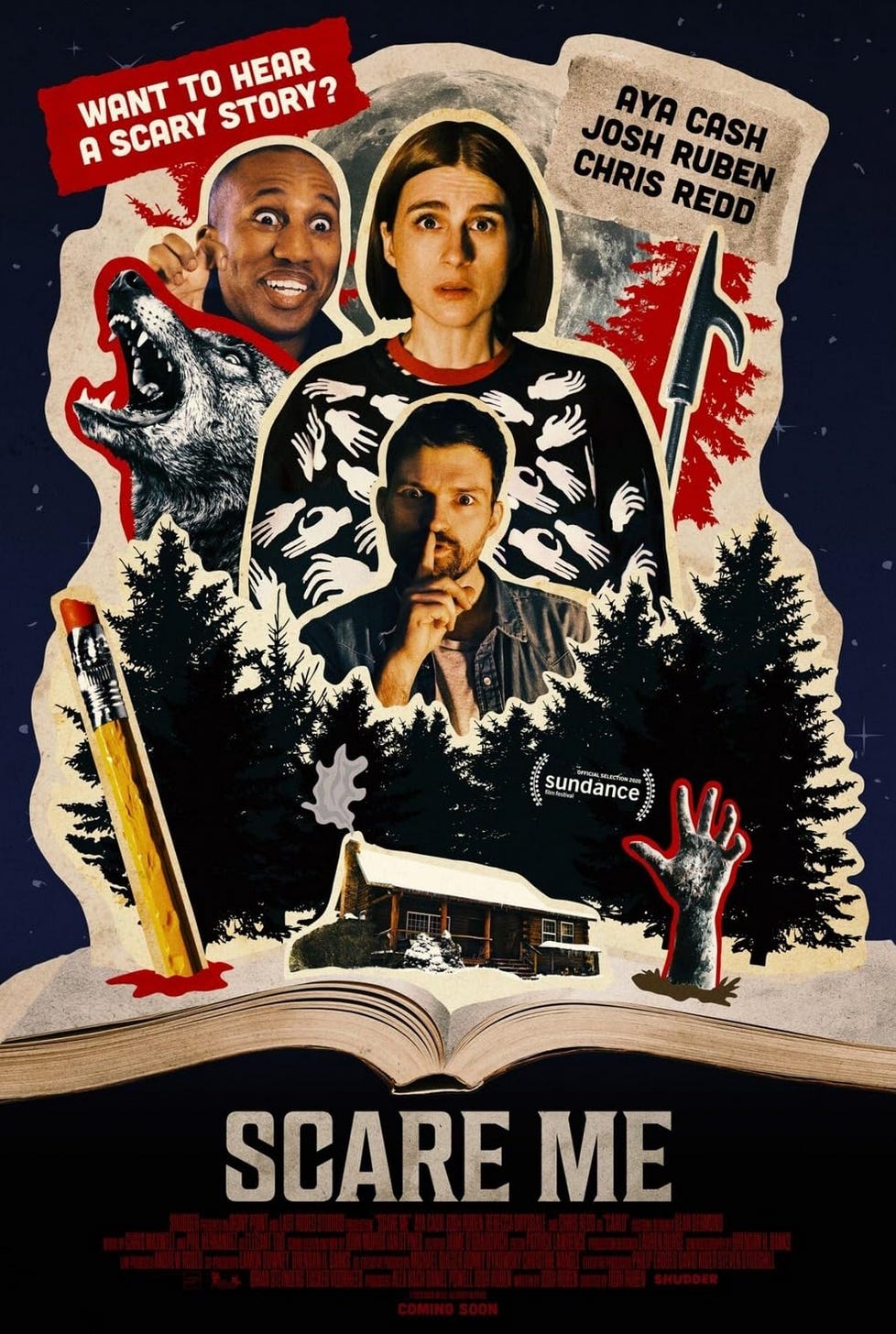
Recurring in the zeitgeist’s cinema rogues’ gallery — along with the texters and talkers — is the self-proclaimed horror connoisseur who demands that a movie scare them, and then walk out of the screening bragging about how unscary the film is.
This behaviour — and versions of this behaviour — is not indicative of an actual horror lover, who understands that interacting with horror material is a means of fun/engagement rather than actual, full-blown fear, hence the buffer of storytelling. Knowingly entering the orbit of a scary story with the subconscious intent to lord over its perceived unscariness is sort of like going on a date with the intent to tell the other person how much of a loser they are; it misses the point of this whole enterprise being a social act.
Even long before Fanny (Aya Cash) tells Fred (Josh Ruben) to scare her, it’s clear that she intends to use his amateur storytelling abilities to feel better about herself as both a teller and listener of stories. She rolls her eyes at the mention of Silver Bullet, calling it “childish, campy garbage” as if horror subculture — singular in the degree of devotion to its genre — isn’t downright celebratory over horror’s storied ability to be anything, everything, something, and nothing, from Silence of the Lambs to Nope to C.H.U.D. to Zombies vs. Strippers. Conforming and nonconforming, there is love for it all. Fanny rejects this, or at least gives the pretense of rejecting this for the purpose of puffing up her ego. Perhaps the film’s most striking indictment of such behaviour is in how it contrasts this with the cheeky joy of Fanny and Fred’s genuine bonding moments, like their shared love for Tales from the Crypt (with their imitations of the Cryptkeeper at once highlighting the fun that’s well and truly meant to be had with scary stories).
More acute, however, is Scare Me’s interest in how gender politics interact with such matters of storytelling and horror subculture.
Fred is both a victim and perpetrator of patriarchy. As a harbourer of the privilege hat-trick (white, male, heteronormative), Fred is equipped to move through a world that prioritizes his social standpoint, but is also only valued according to his proficiency in this very same world. His worldly incompetence, then — say, not knowing how to make a fire, or not being able to locate the address of his cabin for a pizza order — becomes ground for masculine ridicule; him being an “emasculated man” is funny. He’s a “pussy” for not wanting to do cocaine.
Meanwhile, the world that prioritizes men like Fred has no use for matters of the imagination, i.e. storytelling; something Fred is also incompetent at, but loves, thereby further defying — arguably through the very act of loving more than his affinity for storytelling — what this world demands of him.
Suddenly, the layers of Fred’s relationship to storytelling start to multiply. On the surface, his “werewolves have guns, get revenge” vibe reads as him just being another white guy that probably complains about art that gets political, not realizing that the value of fiction has always been in the ways it anchors itself in real-world matters.4 But maybe that’s just it; perhaps Fred focuses on the unanchored escapism aspect of stories precisely because he’s sick of being in a world that only seems to view him as a useless arm of the patriarchy; either dangerous or worthy of ridicule. Stories let him escape the expectation of competency. Fanny brings competency back into the equation, shutting out joy in the process.
And after a night of ridicule — ridicule that could have been the inclusive, Cryptkeeper-coded joy that did make itself present that night, and which Fred was actually, sincerely hoping for — he decides he prefers danger.
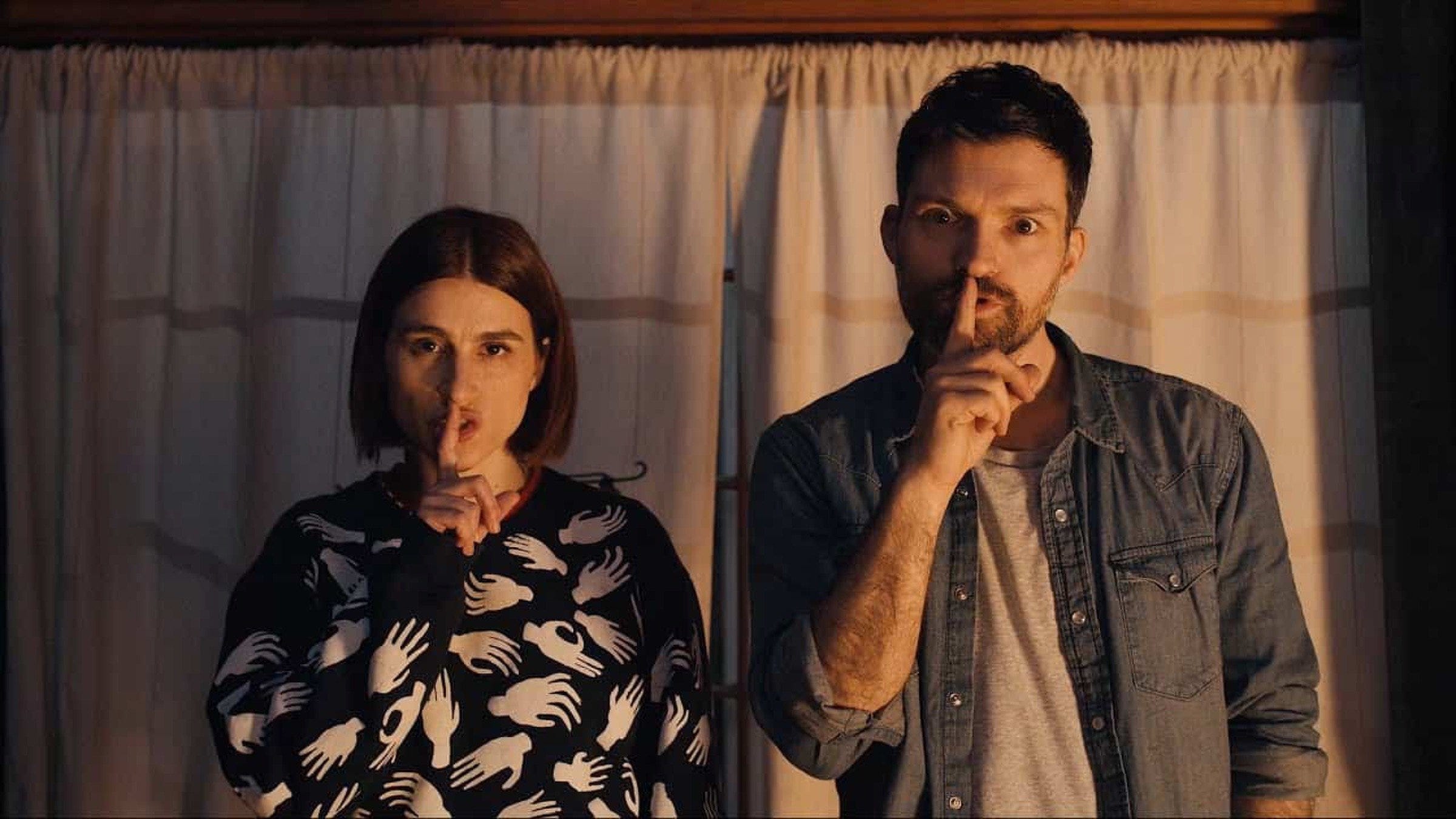
As mentioned earlier, the storytelling buffer allows us to engage with scary matters safely, cutting us off from actual, full-blown fear, such as that felt by Fanny when Fred ostensibly threatens to attack and/or kill her as the night comes to a close. As Fanny hides from Fred, unsure if he’s actually trying to kill her but understandably taking no chances, Fred mutters “This might be the scariest story of all, and *I* thought of it!”
And he’s right. You could craft the most meticulous, graphic scary story in history and it wouldn’t hold a fraction of the terror stored in the utterly unoriginal and twice as horrific situation of a woman being alone with a man who might want to kill her. This, because the purpose of scary stories isn’t to actually scare people; it’s to engage in social recreation. If your goal is to scare — really scare — someone, why wouldn’t you just convince someone that you’re trying to kill them? This can come to Fred easily because he’s a man, and Fanny is a woman; all Fred has to do is surrender his affinity for imagination and submit to the world that seems insistent on deciding who he is. In doing so, he becomes very competent. This is the tragedy.
And like that, the twin-barrel takedown of both patriarchy and its anti-social kindling is complete, with both storytelling essence and horror subculture as its novel ammunition. It’s Bettina — the cab driver and hobbyist writer who takes Fred to his cabin at the outset of the film — who ultimately benefits from the ordeal, finding her way to writerly stardom on the back of Fanny’s abandoned notebook. That Bettina is characterized with awkward sincerity and overflowing enthusiasm is no accident.
Right up there with other modern horror juggernauts of inventive narrative depth like Late Night with the Devil and Together. To our shame, Josh Ruben is one of the quieter products of this internet sketch comedian-turned-horror filmmaker era.
Realism is something completely different.
I say “ancient Chinese,” but obviously this isn’t unique to ancient Chinese penal codes.
Inigo Laguda, this was the film I mentioned during the live chat the other day.
Like, for example how Fanny’s book “Venus” only seems to be about women who turn into zombies when it’s really about gender politics and how men attach to their mothers.
I, too, found Sentimental Value a bit tedious. I wonder whether the accolades owe something to the scrim a non-English language creates between a film and its English-speaking audience — hiding flaws, elevating attributes. The language creates an aesthetic distance which encourages audiences to fill in the rest. Add the subject of filmmaking and incredible acting and you get a Golden Retriever of a movie: inoffensive, placid and easy to pet.
I have not seen Zombies vs. Strippers (2012), but I have seen Zombie Strippers! (2008). Does that count? (Leave it to the horror genre to double down on a concept like that!)